Why Billnox is built for solo freelancers, not teams
Team tools carry seats, roles and approval chains a solo freelancer never needs. What Billnox leaves out, and what it builds for one person instead.
By Billnox · · 2 min read
Most time and billing tools are designed for a company: several people, roles, permissions, approval chains. A solo freelancer carries that weight and uses none of it. Billnox starts from the other end: one person, several clients, and a need to show each client clear proof of the work.
What one person actually needs
- Time kept per client, and per project where it helps.
- A way to show a client what they are paying for.
- Billing that matches how each client pays: by the hour, or a fixed retainer.
- An invoice that comes straight from the record.
The client does not need an account
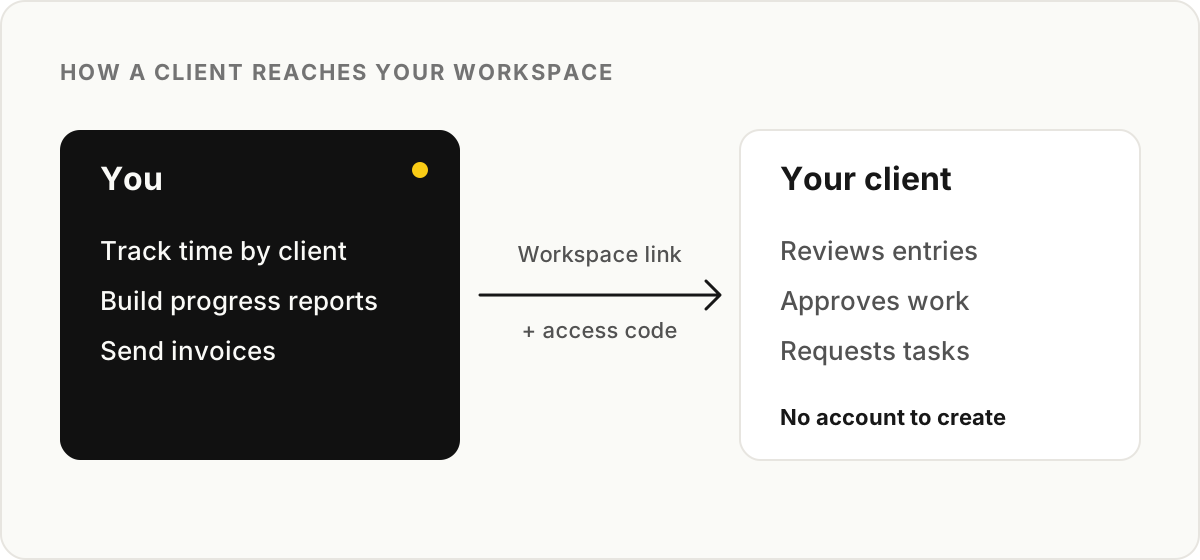
Asking clients to sign up is where many tools lose them. In Billnox the client opens a workspace link and enters an access code. They can review entries, approve them and send task requests, and you can reset the code whenever you need to. The client workspace page has the full picture.
Billing set per client
Each client has their own billing mode: hourly, or a fixed monthly retainer on a monthly or fortnightly cycle. Invoices use the client's billing currency and Billnox does not convert amounts, so there is no exchange-rate step to make a total drift. Dates on reports follow your workspace timezone, so a late-night entry lands on the right day for the client reading it.
A quiet interface
There is no organisation chart to configure and no seat count to manage. The aim is a tool that feels like a well-made instrument: you start a timer, you finish the work, and the record is already there when it is time to invoice. Freelance time tracking shows what that looks like day to day.
Who it is not for
If you need several people tracking time under one account, shared team reports or seat management, Billnox is the wrong tool today. It is built for one person running a freelance practice, and it leaves out team features on purpose.